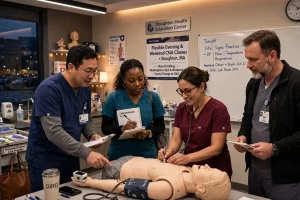

CNA certification serves as the entry point for many healthcare careers. Employers in hospitals, nursing homes, and home care agencies require this credential before hiring candidates for patient care positions. This article explains how CNA certification increases your employment options and what employers look for when hiring certified nursing assistants.
Why Employers Require CNA Certification
Healthcare facilities need staff who can provide care safely and competently. CNA certification demonstrates that a candidate has completed approved training and passed a competency exam.
Proof of Training Completion
CNA certification shows employers that you completed a state-approved training program. This training includes classroom instruction and hands-on clinical practice. Employers trust that certified candidates learned the skills needed for patient care, including vital signs measurement, infection control, and patient mobility assistance.
Verification of Competency
To earn CNA certification, candidates must pass both a written exam and a skills demonstration. The written portion tests knowledge of patient care procedures, safety protocols, and communication methods. The skills test requires candidates to perform care tasks in front of an evaluator. Passing both components proves that the candidate can apply what they learned.
Legal Requirements
Many states mandate that anyone providing direct patient care in certain facilities holds CNA certification. Facilities that hire uncertified workers for certified positions risk penalties, fines, or loss of licensure. By hiring only certified CNAs, employers protect themselves and their patients.
CNA Certification & Hospital Employment
Hospitals employ CNAs across multiple departments. CNA certification opens doors to positions that would otherwise be unavailable.
Medical-Surgical Units
Medical-surgical floors in hospitals treat patients recovering from surgeries or managing illnesses. CNAs on these units assist with bathing, feeding, repositioning, and transporting patients. They also record vital signs and report changes to nursing staff. Hospitals prefer certified CNAs because the pace on these units requires staff who can work with minimal supervision.
Emergency Departments
Some hospitals hire CNAs to work in emergency departments. In these settings, CNAs help with patient intake, transport patients to testing areas, and assist nurses with procedures. CNA certification signals that the candidate can handle fast-paced environments where patient conditions change quickly.
Specialty Units
Hospitals with specialty units, such as cardiac care or orthopedics, also employ CNAs. These positions may require additional training, but CNA certification serves as the baseline qualification. Once hired, CNAs can receive specialized instruction for their assigned unit.
CNA Certification in Nursing Home Settings
Nursing homes and long-term care facilities employ the largest number of CNAs. Certification is a non-negotiable requirement in this sector.
Daily Care Responsibilities
CNAs in nursing homes provide daily care to residents who cannot fully care for themselves. Tasks include bathing, dressing, grooming, and feeding residents. CNAs also help residents move between beds, wheelchairs, and common areas. Certification ensures that CNAs know proper techniques to prevent injuries.
Career Advancement in Long-Term Care
Nursing homes sometimes promote CNAs to supervisory roles or specialized positions. CNA certification is the first step toward these opportunities. Some facilities also offer tuition assistance for CNAs who want to pursue nursing degrees.
Home Care Opportunities for Certified CNAs
Home care agencies provide services to clients in their residences. CNA certification qualifies you for these positions, which differ from facility-based work.
One-on-One Care
Home care CNAs typically care for one client at a time. This allows for focused attention and relationship building. Clients and their families often prefer certified CNAs because certification indicates a level of professionalism and training.
Schedule Flexibility
Home care positions often offer more control over scheduling than hospital or nursing home jobs. Certified CNAs can choose shifts that fit their lives, making this option appealing for those with other responsibilities.
Independence & Responsibility
Working in home care requires CNAs to function without direct supervision from nurses or other healthcare professionals. CNA certification prepares workers for this independence by teaching decision-making skills and when to contact supervisors or emergency services.
How CNA Certification Affects Your Pay
Certification influences both starting wages and earning capacity over time.
Higher Starting Wages
Many employers pay certified CNAs more than they pay non-certified aides. The additional training and testing required for certification justify this difference. Facilities that require certification also tend to offer better benefits packages.
Access to Specialized Positions
Certain positions within healthcare facilities pay more than standard CNA roles. These positions, such as restorative aides or hospice CNAs, require certification as a starting point. Without certification, these higher-paying opportunities remain out of reach.
Steps to Maintain Your CNA Certification
Earning certification is only the first step. Maintaining it requires ongoing effort.
Renewal Requirements
CNA certifications expire, typically every two years depending on the state. Renewal requires proof of employment as a CNA and completion of continuing education hours. Failing to renew on time can result in losing your certification.
Staying Current on the Registry
Each state maintains a CNA registry that lists all certified nursing assistants. Employers check this registry before hiring. Ensuring your name remains on the registry in good standing protects your employment options.
Making the Most of Your CNA Certification
Certification alone does not guarantee employment. How you present yourself matters. List your certification prominently on your resume and include the date you earned it. During interviews, speak about your training and how it prepared you for patient care.
CNA certification provides the foundation for a career in healthcare. Hospitals, nursing homes, and home care agencies all require this credential, and holding it increases your chances of landing a position in any of these settings.