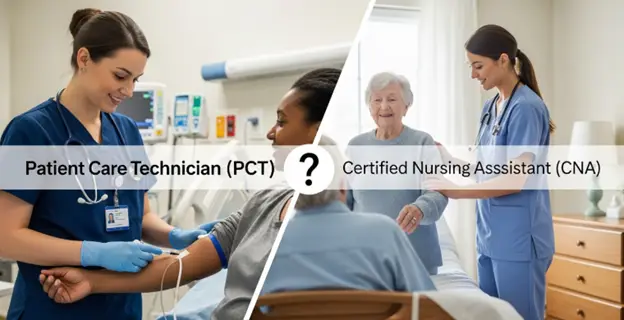
Healthcare jobs often come with confusing titles, especially for roles that overlap in duties and responsibilities. One of the most common questions is: “Is a patient care technician the same as a CNA?” While both positions focus on patient care and assist nurses in healthcare settings, they are distinct roles with differences in training, certifications, and job responsibilities. Understanding these differences can help aspiring healthcare professionals choose the right career path.
Short Answer: Are Patient Care Technicians and CNAs the Same?
No, a patient care technician (PCT) is not exactly the same as a certified nursing assistant (CNA). Both provide essential patient care, but PCTs typically receive additional training in areas like phlebotomy, EKG, and other technical procedures. The overlap in daily duties can cause confusion, but the distinction lies in education, certification, and scope of practice. Understanding these differences is crucial for a holistic approach to healthcare, aligning with the One Health and Beyond perspective that emphasizes interconnected health for patients, communities, and care providers.
Understanding the Roles
What is a Patient Care Technician (PCT)?
A Patient Care Technician is a healthcare professional who provides direct care to patients under the supervision of registered nurses (RNs) or licensed practical nurses (LPNs).
General Responsibilities:
- Taking vital signs and monitoring patient conditions
- Assisting with activities of daily living (bathing, feeding, mobility)
- Performing basic lab procedures such as drawing blood (phlebotomy)
- Conducting EKGs or other simple diagnostic tests
Typical Workplace Settings:
- Hospitals
- Outpatient clinics
- Nursing homes
- Assisted living facilities
Required Education and Certification:
- High school diploma or GED
- Completion of a PCT training program
- Certification may include phlebotomy and EKG credentials
Skills and Competencies:
- Strong patient care skills
- Technical proficiency in basic lab tests
- Communication and teamwork abilities
What is a Certified Nursing Assistant (CNA)?
A Certified Nursing Assistant provides essential patient support and basic nursing care. CNAs are often the first point of contact for patient assistance and play a crucial role in healthcare facilities.
Primary Duties:
- Assisting with bathing, feeding, dressing, and hygiene
- Taking and recording vital signs
- Helping patients with mobility and exercises
- Reporting patient changes to nurses
Work Environment Overview:
- Hospitals
- Nursing homes
- Home healthcare
Required Training and Certification:
- Completion of a state-approved CNA program
- Passing a state competency exam to earn certification
Skills and Competencies:
- Compassionate patient care
- Attention to detail
- Ability to follow healthcare protocols
Key Differences Between a PCT and a CNA
- Scope of Practice: PCTs often perform additional technical tasks like EKGs and phlebotomy. CNAs focus primarily on personal care and basic medical assistance.
- Training Duration: PCT programs are usually longer due to extra certifications.
- Certifications: PCTs may hold specialized credentials; CNAs are certified in state nursing assistant programs.
- Work Responsibilities: PCTs have a slightly broader scope, including lab and monitoring tasks.
Step-by-Step Guide: How to Become a PCT vs. a CNA
Step 1: Educational Requirements
Both roles require a high school diploma or GED. Some programs may recommend or require basic courses in biology or health sciences.
Step 2: Training Programs
CNA Programs:
- Duration: 4–12 weeks
- Includes classroom instruction and clinical practice
- Focuses on patient care basics
PCT Programs:
- Duration: 3–6 months (can vary by state)
- Includes CNA training plus additional certifications like phlebotomy, EKG, and basic lab procedures
- Combines classroom and hands-on clinical experience
Step 3: Certification and Licensing
CNA Certification:
- Completion of a state-approved program
- Passing the state competency exam
PCT Certification:
- Completion of a PCT training program
- Certification may include EKG, phlebotomy, and other technical skills
- Requirements can vary by state or employer
Step 4: Job Placement and Career Path
Typical Employers:
- Hospitals, clinics, nursing homes, and home health agencies
Career Growth Opportunities:
- PCTs: Can specialize in lab work, phlebotomy, or EKG technology
- CNAs: Can advance to Licensed Practical Nurse (LPN) or Registered Nurse (RN) roles
Comparison Table: PCT vs. CNA
| Feature | Patient Care Technician (PCT) | Certified Nursing Assistant (CNA) |
| Education | High school diploma + PCT program | High school diploma + CNA program |
| Certification | PCT certificate (may include phlebotomy, EKG) | CNA state certification |
| Duties | Vital signs, basic patient care, phlebotomy, EKG | Vital signs, bathing, feeding, mobility assistance |
| Work Settings | Hospitals, clinics, nursing homes | Hospitals, nursing homes, home care |
| Career Growth | Can specialize further in lab or tech roles | Can advance to LPN or RN |
| Salary Range | Slightly higher than CNA on average | Entry-level healthcare pay |
Common Questions People Also Ask
Can a CNA work as a PCT without extra training?
Typically, CNAs need additional training and certification to perform the technical duties of a PCT, such as EKGs or phlebotomy.
Are PCTs required in all states?
No. PCT certification and scope vary by state, while CNA certification is universally recognized across the U.S.
Do PCTs earn more than CNAs?
Yes, PCTs generally earn slightly higher salaries due to additional skills and certifications. Pay depends on experience, location, and workplace.
Which role has better job prospects?
Both roles are in high demand, but PCTs may have a slight advantage in hospitals due to their broader skill set.
FAQs About PCTs and CNAs
- Can a PCT perform all CNA tasks?
Yes, PCTs can perform basic CNA duties but also handle additional technical tasks. - How long does it take to become a PCT versus a CNA?
CNA: 4–12 weeks; PCT: 3–6 months depending on program and certifications. - Are PCTs and CNAs allowed to give medications?
Typically, CNAs cannot administer medications. PCTs may have limited scope depending on state regulations. - Is one role considered more prestigious than the other?
Neither is “better” universally; it depends on skill set, workplace, and career goals. - Do hospitals prefer hiring PCTs or CNAs?
Hospitals often prefer PCTs for technical skills but hire both based on need. - Can CNAs upgrade to PCT without repeating all training?
CNAs can often take bridge programs to earn PCT certification. - What certifications are commonly added to PCT training?
Phlebotomy, EKG, basic lab procedures, and sometimes medication administration under supervision. - Is there a difference in liability or scope of practice?
Yes, PCTs may have slightly more liability due to technical procedures, and scope varies by state.
Safety and Legal Considerations
Healthcare workers must follow strict safety protocols to protect patients and themselves.
- OSHA Guidelines: Ensure safe handling of medical equipment, proper lifting techniques, and infection control.
- State Regulations: Scope-of-practice varies by state; always adhere to local laws.
- Patient Handling & Infection Control: Proper techniques prevent injury and reduce risk of infection transmission.
Conclusion
While CNAs and PCTs share core responsibilities in patient care, they are not the same. PCTs have additional technical training, certifications, and slightly broader duties, making them valuable in hospitals and specialized healthcare settings. CNAs provide foundational care and are essential to patient support. Choosing between the two depends on career goals, desired skills, and workplace preferences. Aspiring healthcare professionals should research state-specific requirements and consider which path aligns with their long-term objectives.