By One Health Training Center Team
350,000+
Cardiac arrests yearly in the US
9-10%
Overall survival rate
7-10%
Survival decrease per minute of delay
Every year, more than 350,000 out-of-hospital cardiac arrests (OHCA) occur in the United States. Despite medical advances, the overall survival rate remains low—around 9-10%.
When a heart suddenly stops, every second matters. The difference between life and death often depends on how quickly a bystander begins CPR and uses an Automated External Defibrillator (AED).
But many rescuers—both trained healthcare providers and everyday Good Samaritans—experience confusion when the AED announces: “No shock advised.”
It simply means the heart is in a non-shockable rhythm.
In this in-depth guide, we clearly explain:
Before understanding heart rhythms, it’s important to distinguish Sudden Cardiac Arrest from a heart attack.
The “Plumbing” Problem
The “Electrical” Problem
Sudden Cardiac Arrest is immediately life-threatening and requires CPR and AED use within minutes.
An AED is not just a shock-delivery device—it is a smart rhythm analyzer.
→ Shock may reset the heart
→ Shock will not help
That’s why the AED sometimes says “No shock advised.”
A shockable rhythm occurs when the heart has electrical activity, but it is completely uncoordinated. The heart is not pumping—it is vibrating.
Shockable rhythms account for about 20-25% of cardiac arrests, but survival rates are significantly higher when treated quickly—up to 30-40% with early CPR and defibrillation.
Ventricular fibrillation causes the lower chambers of the heart (ventricles) to quiver rapidly and chaotically—often compared to a “bag of worms.” No blood reaches the brain or vital organs.
The electrical system is active but disorganized. A defibrillation shock can stop the chaos and allow the heart’s natural pacemaker to restart a normal rhythm.

VF ECG Pattern: Chaotic, irregular waveform
The heart has organized electrical activity, but it contracts so fast that it cannot fill with blood or produce an effective pulse.
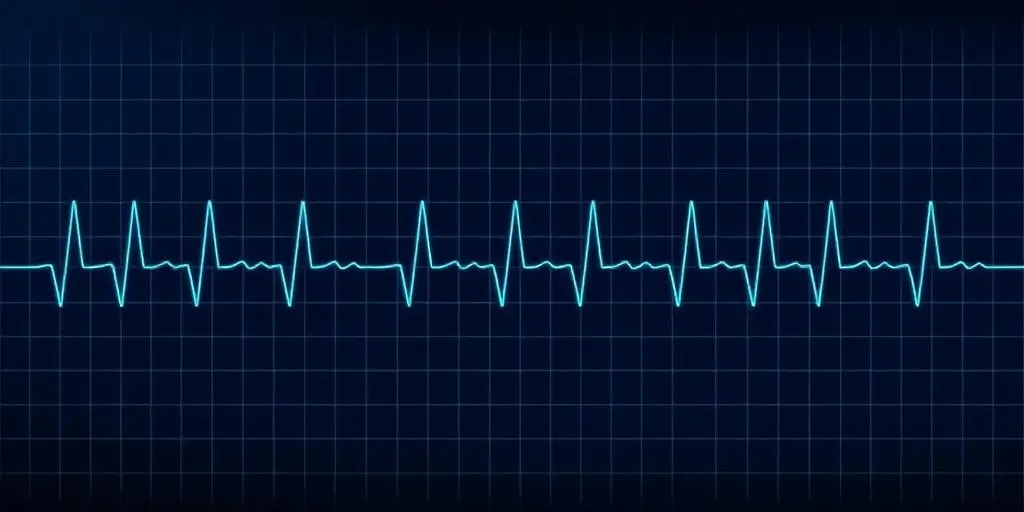
pVT ECG Pattern: Rapid, wide QRS complexes
Each minute of delay reduces survival by 7-10%
When an AED says “No shock advised,” the person is usually in one of the following rhythms. In these cases, high-quality CPR is the most important lifesaving action.
Non-shockable rhythms now make up 75-80% of cases, with survival rates around 5-10%.
Asystole is the complete absence of electrical activity—the heart is silent.
Movies often show doctors shocking a flatline to “restart” the heart. This is medically incorrect. You cannot shock asystole because there is no electrical activity to reset.
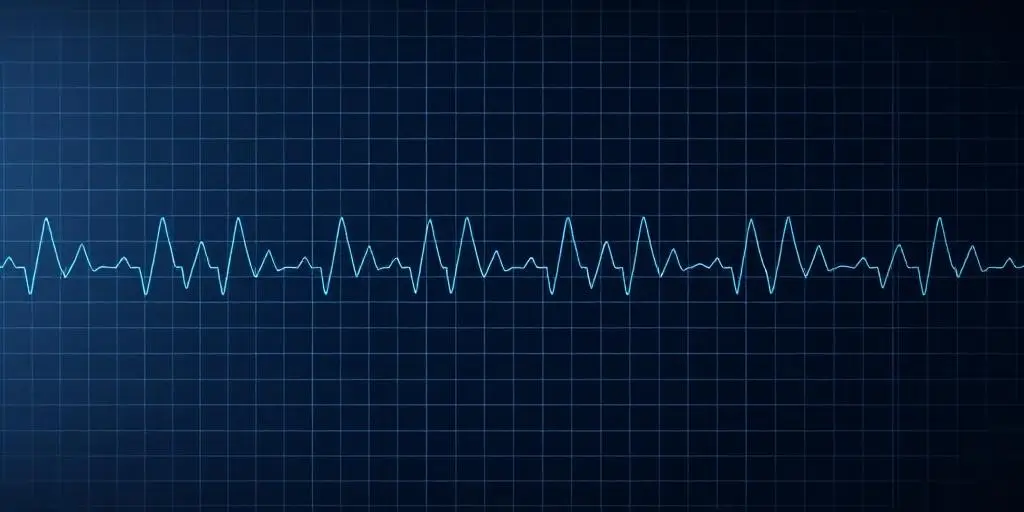
Asystole ECG Pattern: Flat line with no activity
Survival rates are extremely low, but CPR is still critical.
Electrical signals appear on the monitor, but the heart muscle is unable to contract effectively. The lights are on, but the pump is broken.
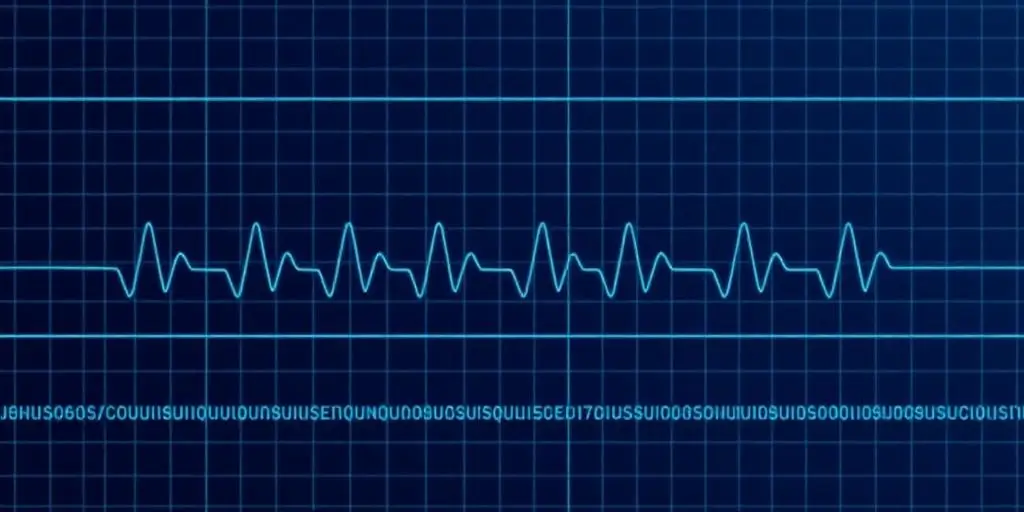
PEA ECG Pattern: Organized rhythm without effective contraction
| Feature | Shockable Rhythms (VF, pVT) | Non-Shockable Rhythms (Asystole, PEA) |
|---|---|---|
| Heart Status | Chaotic / Quivering | Silent or Mechanical Failure |
| AED Message | “Shock Advised” | “No Shock Advised” |
| Main Action | Shock + CPR | CPR + Medications |
| Prevalence in OHCA | ~20-25% | ~75-80% |
| Survival Rate | Higher (~30–40%) | Lower (~5–10%) |
According to the CARES 2024 Registry and American Heart Association updates:
137,000+
OHCA events reported in 2024
20-25%
Shockable rhythms (declining)
75-80%
Non-shockable rhythms
9-10%
Overall survival to hospital discharge
30-40%
Survival for shockable rhythms
41.7%
Bystander CPR rates (improved)
Early CPR can double or triple survival chances, regardless of rhythm
You do not need to diagnose the rhythm—the AED does that for you.
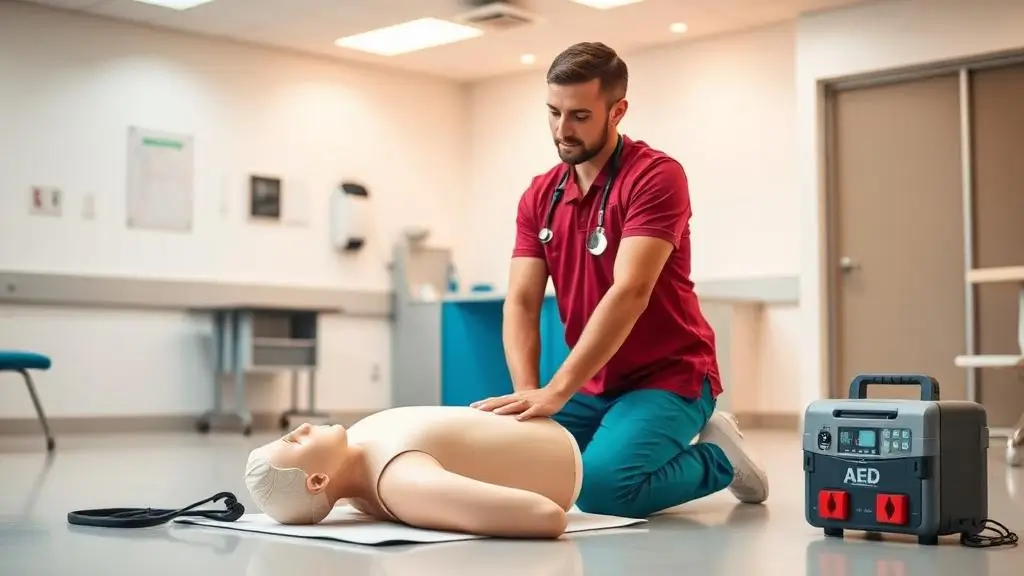
Call 911 immediately
Start CPR
(100–120 compressions/min)
Apply the AED
Follow voice prompts
A non-shockable rhythm can convert into a shockable rhythm during CPR.
Remove the patient from water and dry the chest
Shave pad areas using the AED razor
Remove patches and wipe skin before pad placement
Sudden Cardiac Arrest is complex—but saving a life doesn’t have to be.
Whether the heart is in a chaotic shockable rhythm or a silent non-shockable rhythm, the patient needs you.
Call 911 • Push hard and fast • Follow the AED
Knowledge builds confidence—but practice saves lives. Enroll in One Health Training Center’s CPR, BLS, or CNA certification programs and gain hands-on skills to respond confidently in an emergency.