Switching careers is hard enough without adding a scheduling problem on top of it. A lot of people who want to become a Certified Nursing Assistant already have a full-time job, kids to pick up from school, or a shift that runs late into the night. The idea of sitting in a classroom from nine to five, five days a week, just isn’t realistic for most working adults. That’s exactly why evening and weekend CNA classes exist in Stoughton, and why they have become the path more people are choosing when they want to move into healthcare without putting their current life on hold.
Why Working Adults Choose CNA Training Over Other Career Paths
Becoming a CNA doesn’t require years of school or a mountain of debt. Massachusetts requires a training program of at least 75 hours, including a minimum of 16 hours of supervised clinical training before you have any direct contact with patients. Compared to nursing school, which can take two to four years, that timeline is short enough to fit into a life that’s already full.
This makes CNA training a common entry point for people who already work in customer service, retail, food service, or manufacturing and want to move into a field with more stability and more room to grow. Once you’re certified, you can work in hospitals, nursing homes, assisted living facilities, or home care, and the CNA credential also serves as a foundation if you later decide to pursue nursing.
What Evening & Weekend Scheduling Actually Looks Like
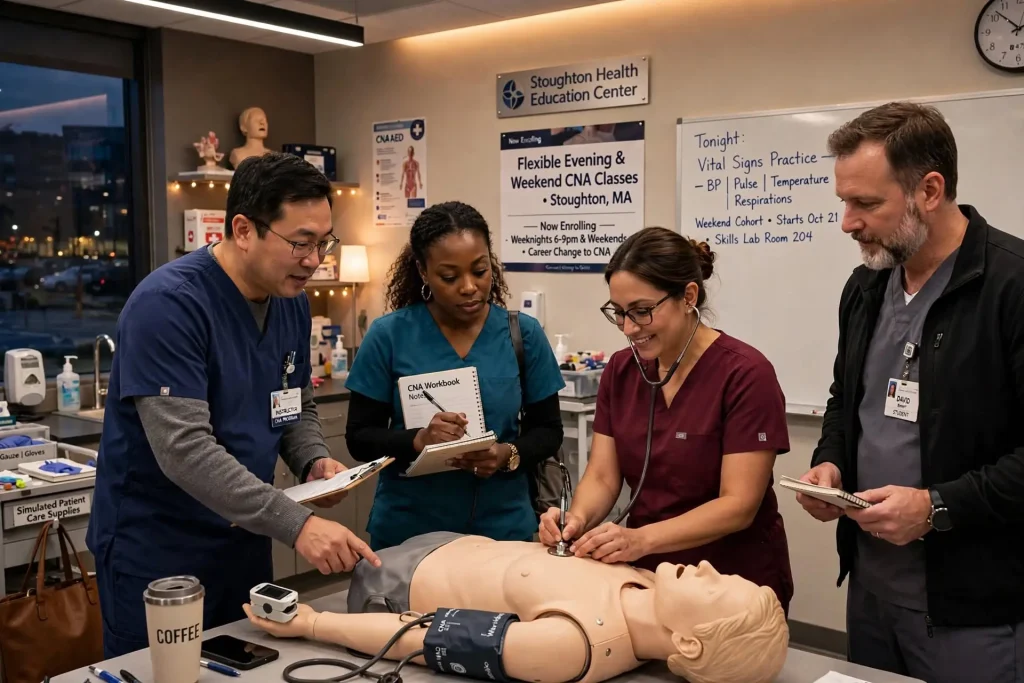
Programs built around evening and weekend hours are designed with the realities of adult life in mind. Instead of daytime blocks that conflict with a nine-to-five job, classes are scheduled for after-work hours during the week or condensed into weekend sessions. Clinical training hours are arranged the same way, so you’re not forced to take unpaid time off in the middle of the day just to complete your hands-on requirements.
Evening Classes Fit Around a Standard Workday
Evening sections typically start after five in the afternoon, giving you time to finish a normal shift, get home, and still make it to class. This setup works well for people whose jobs run on a traditional daytime schedule and who need their evenings free to study once class ends.
Weekend Classes Work for Rotating or Overnight Shifts
If your job runs on a rotating schedule, or if you work overnight and sleep during the day, weekend classes solve a different problem. Saturday and Sunday sessions let you keep your weekday routine untouched, which matters a lot if your current job doesn’t offer much flexibility around requesting time off.
Planning Your Weeks Around a Flexible Schedule
Going through CNA training while working full time takes some planning, but it’s manageable once you set a routine. A few things make the transition smoother.
Talk to Your Current Employer Early
If you’re keeping your job while you train, let your supervisor know your schedule in advance, especially around your clinical training days. Most employers are willing to work with you on this once they understand the time frame is short and has a clear end date.
Block Out Study Time the Same Way You Block Out Class Time
Evening and weekend programs move at a steady pace, and skipping review time between sessions makes it harder to keep up. Treating your study time as a fixed appointment, the same way you’d treat a shift at work, keeps you from falling behind.
Line Up Childcare or Family Support Before Classes Start
If you have kids or other family responsibilities, sort out coverage for your class nights and clinical days before your program begins rather than scrambling once it’s already underway. A little planning here prevents a lot of stress later.
What to Expect From Clinical Training on a Flexible Schedule
The clinical portion of CNA training is where you apply what you learn in the classroom under direct supervision, working with real patients on tasks like vital signs, mobility assistance, and personal care. Even in an evening or weekend program, this part of your training is not shortened or watered down. It still meets the same state-mandated hour requirement, it’s just scheduled at times that fit around a working adult’s life instead of a traditional student’s life.
Getting Ready for Certification Once Training Ends
After you finish your training hours, the next step is the state certification exam, which includes both a written knowledge test and a hands-on skills evaluation. Programs built for working adults typically build exam preparation into the final weeks of the course, so you’re not left studying alone after your last class. Once you pass, your name goes onto the Massachusetts Nurse Aide Registry, and you’re ready to start applying for CNA positions.
Why Stoughton Is a Practical Location for This Kind of Training
Stoughton sits along the MBTA Commuter Rail line and is easy to reach from surrounding towns in Norfolk and Plymouth counties, which matters if you’re commuting from a job or home in a nearby community. For people who live and work in this part of the South Shore, having a training option close to home cuts down on travel time on nights and weekends when your schedule is already tight.
Making the Decision to Start
Switching careers always comes with some risk, but training that fits into evenings and weekends removes one of the biggest obstacles working adults face when they think about healthcare as a next step. You don’t have to quit your job or put your income on pause to get started. You just need a schedule built around the life you already have, and a clear plan for the weeks it will take to get certified.