The demand for in-home care services has grown rapidly in recent years as more patients choose to recover or receive long-term care in their own homes. This shift has created strong demand for trained caregivers, including both Certified Nursing Assistants (CNAs) and Home Health Aides (HHAs).
A common question among healthcare workers and job seekers is: can a CNA work as a home health aide? Understanding how these two roles overlap can help caregivers expand their career options while helping patients receive quality care.
Although both professions focus on assisting patients with daily activities and health monitoring, they differ slightly in training, responsibilities, and work settings. This guide explains the relationship between the two roles, legal considerations, and how CNAs can transition into home healthcare.
Short Answer — Can a CNA Work as a Home Health Aide?
Yes, in many situations a CNA can work as a home health aide. In fact, CNA training often exceeds the basic requirements needed for home health aide positions. Because CNAs receive clinical instruction in patient care, vital signs monitoring, and infection control, many home healthcare agencies consider them highly qualified for in-home caregiving roles.
However, a few factors can affect eligibility:
- State healthcare regulations
- Policies of the hiring agency
- Additional orientation or certification requirements
In many cases, employers actually prefer hiring CNAs for home health aide positions because they bring stronger medical knowledge and experience working with patients.
Understanding the Difference Between CNAs and Home Health Aides
Although these roles share similarities, it is important to understand their unique responsibilities and training paths.
What Is a Certified Nursing Assistant (CNA)?
A Certified Nursing Assistant (CNA) is a trained healthcare professional who provides direct patient care under the supervision of licensed nurses. CNAs play an important role in hospitals, nursing homes, and rehabilitation facilities.
The CNA certification process usually involves:
- Completing a state-approved training program
- Clinical practice hours
- Passing a competency examination
CNAs commonly work in:
- Hospitals
- Nursing homes
- Rehabilitation centers
- Long-term care facilities
Their responsibilities often include assisting patients with daily care, taking vital signs, and reporting health changes to nurses.
What Is a Home Health Aide (HHA)?
A Home Health Aide (HHA) provides personal care and basic support services to patients in their homes. The primary goal of an HHA is to help individuals maintain independence while receiving necessary assistance.
Typical duties include:
- Helping with bathing and grooming
- Assisting with mobility
- Preparing meals
- Supporting daily living activities
- Monitoring patient comfort and well-being
Unlike CNAs, HHAs primarily work in private homes or home healthcare programs rather than medical facilities.
Key Similarities Between CNA and Home Health Aide Roles
Despite their differences, the two roles share many responsibilities:
- Assisting patients with personal care
- Supporting daily living activities
- Monitoring patient well-being
- Reporting health concerns to healthcare professionals
- Working under nurse supervision
Because of these similarities, many CNAs successfully transition into home health aide roles.
Can a CNA Work as a Home Health Aide in Different States?
State Regulations That Affect CNA and HHA Roles
Healthcare roles are regulated at the state level, which means job requirements may vary. State health departments and nursing boards determine training standards for CNAs and HHAs.
Some states allow CNAs to work as home health aides without additional certification, while others require a short orientation program.
States Where CNA Certification Automatically Qualifies for HHA Work
In several states, CNA certification is recognized as equivalent or higher than HHA training. This means CNAs can work in home healthcare settings without completing additional courses.
Home care agencies often value CNA training because it includes clinical patient care skills.
Situations Where Additional Training May Be Required
Even if CNA credentials are accepted, some agencies may still require:
- Orientation for home care environments
- State-specific training modules
- Medicare or Medicaid compliance training
- Patient privacy education
These programs ensure caregivers understand how to safely provide care in a home setting.
Can a CNA Work as a Home Health Aide Without Additional Certification?
When CNA Training Is Enough for Home Health Work
Many home healthcare agencies, including organizations such as One Health and Beyond, hire CNAs directly because their training already includes key caregiving skills such as:
- Infection control
- Patient mobility assistance
- Vital signs monitoring
- Personal care support
This makes CNAs highly qualified for home health aide roles.
When a CNA Might Need Extra Home Health Training
In some situations, CNAs may need additional instruction on topics such as:
- Home safety protocols
- Supporting patient independence
- Hospice care practices
- Family communication and caregiving support
These skills are important when providing care in a patient’s home rather than a medical facility.
Employer Policies That Influence Job Eligibility
Some agencies create internal requirements based on insurance policies or care standards. These may include:
- Background checks
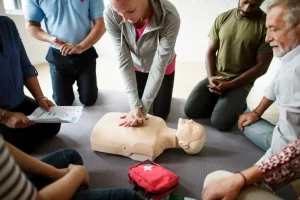
- CPR certification
- Home care orientation programs
Meeting these requirements helps ensure high-quality patient care.
CNA vs Home Health Aide — Role Comparison Table
| Feature | Certified Nursing Assistant (CNA) | Home Health Aide (HHA) |
| Primary work setting | Hospitals, nursing homes | Patient homes |
| Level of training | Clinical certification program | Shorter training program |
| Medical responsibilities | More clinical support tasks | Mostly non-medical support |
| Work supervision | Nurses or medical staff | Nurses or home care coordinators |
| Typical duties | Vital signs, patient care | Personal care, household assistance |
| Certification requirement | State-certified | State or agency-based |
How a CNA Can Start Working as a Home Health Aide
Transitioning from a CNA role to home healthcare is often straightforward.
Step 1: Verify Your State’s Home Healthcare Regulations
Start by checking state health department guidelines to confirm whether CNA certification qualifies you for HHA work.
Step 2: Update Certifications and Background Checks
Ensure your professional credentials are current, including:
- Active CNA license
- CPR certification
- Required health screenings
These are commonly required by home care agencies.
Step 3: Apply to Home Healthcare Agencies
Look for licensed home care providers in your area. When applying, highlight your CNA training and clinical experience on your resume.
Step 4: Complete Home Health Orientation or Training
Most agencies provide onboarding programs covering:
- Patient privacy laws (HIPAA)
- Safety procedures in home environments
- Documentation and reporting protocols
Step 5: Begin Providing In-Home Patient Care
Once hired, CNAs working as HHAs typically provide:
- Personal assistance
- Daily activity support
- Monitoring patient health
- Communication with nurses and healthcare teams
Advantages of CNAs Working as Home Health Aides
Higher Demand in the Home Healthcare Industry
As the population ages, the need for in-home caregiving continues to grow. Many patients prefer receiving care in their homes rather than hospitals or nursing facilities.
Greater Career Flexibility
Home healthcare jobs often offer flexible schedules and more independence compared to facility-based roles.
Stronger Skill Set for Patient Care
CNAs already possess valuable skills such as patient safety awareness, infection control knowledge, and basic clinical observation abilities.
Challenges CNAs May Face in Home Health Roles
Working Independently in Patient Homes
Unlike hospitals, home care settings may involve less immediate medical supervision.
Managing Multiple Responsibilities
Caregivers may assist with both personal care and household tasks.
Safety Considerations in Home Environments
Home health aides must remain alert to potential risks such as:
- Infection control issues
- Fall hazards
- Medication reminders
Responsibilities of a CNA Working as a Home Health Aide
Personal Care Support
Common duties include:
- Bathing assistance
- Grooming support
- Dressing assistance
Mobility and Daily Living Assistance
CNAs help patients maintain independence by:
- Assisting with walking or transfers
- Supporting mobility devices
- Preventing falls
Monitoring Patient Health
Caregivers observe and report changes in the patient’s condition, including:
- Pain levels
- Skin condition
- Signs of illness
These observations are communicated to nurses or physicians.
Real-World Example: CNA Transitioning to Home Health Care
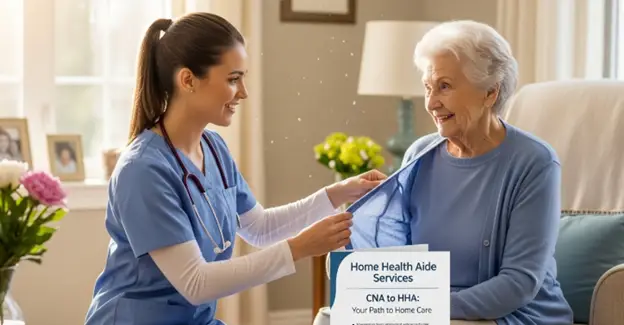
Consider a CNA who previously worked in a nursing home caring for elderly residents. After gaining experience, the caregiver joins a home healthcare agency.
In this role, the CNA assists an elderly patient recovering from surgery. While a visiting nurse manages medical treatments, the CNA helps with daily activities, mobility, and health monitoring.
Because of their training, the CNA quickly adapts to the home setting and provides consistent, compassionate care.
This example highlights how CNA training can translate effectively into high-quality home healthcare support.
Key Skills That Make CNAs Successful Home Health Aides
Successful home health aides often share the following skills:
- Strong communication with patients and families
- Time management and organization
- Compassion and emotional support
- Basic clinical observation skills
- Adaptability in home environments
These abilities help caregivers build trust with patients and provide safe care.
Career Opportunities After Working as a Home Health Aide
Advancement to Licensed Practical Nurse (LPN)
Many CNAs use home healthcare experience as a stepping stone toward nursing education.
Progression to Registered Nurse (RN)
With additional education, caregivers can move into advanced nursing roles.
Specialization in Geriatric or Hospice Care
Home health experience also prepares caregivers for specialized care fields.
Frequently Asked Questions (FAQs)
Can a CNA work as a home health aide legally?
Yes, in many states a CNA can work as a home health aide because CNA training meets or exceeds the requirements for HHA positions. However, regulations vary by state.
Do CNAs get paid more than home health aides?
In many cases CNAs earn slightly higher wages because they receive more clinical training and may perform additional healthcare tasks.
Is CNA training harder than home health aide training?
CNA training programs usually involve more clinical instruction and hands-on practice compared to basic HHA training.
Can a CNA work for a home care agency?
Yes. Many home care agencies actively recruit CNAs due to their patient care experience.
Can a CNA perform medical tasks in home healthcare?
CNAs can assist with certain healthcare tasks under supervision, but advanced medical procedures must be performed by licensed nurses.
Do CNAs need additional certification to work as home health aides?
Sometimes agencies require orientation or additional training specific to home care environments.
What is the difference between CNA and HHA salary?
Salaries vary by region, but CNAs may earn slightly higher wages due to additional training and certification.
Is home healthcare a good career path for CNAs?
Yes. Home healthcare offers flexible schedules, strong job demand, and opportunities for career advancement.
Key Takeaways — Can a CNA Work as a Home Health Aide?
In most situations, the answer to “can a CNA work as a home health aide” is yes. CNA certification typically provides sufficient training for many home care roles.
However, caregivers should always review:
- State healthcare regulations
- Agency policies
- Additional training requirements
With proper credentials and preparation, CNAs can successfully transition into home healthcare roles.
Conclusion
Home healthcare is one of the fastest-growing sectors in the healthcare industry, creating new opportunities for trained caregivers. For many professionals, the answer to can a CNA work as a home health aide is encouraging CNA training often qualifies individuals for these roles.
While specific requirements may vary by state or employer, CNAs are often highly valued in home care because of their clinical experience and patient care skills.
By exploring home healthcare opportunities and maintaining professional certifications, CNAs can expand their careers while helping patients receive compassionate care in the comfort of their own homes.