Home health aides make it possible for people to stay home while they age, recover, or live with a chronic condition. Their scope is deliberately narrow, and understanding those limits protects the client, the aide, and the agency. Nationally the rules come from federal Medicare regulations (42 CFR 484.80) and each state’s licensing rules; in Massachusetts, the Department of Public Health adds its own layer. This guide walks through exactly what HHAs cannot do, why those limits exist, what actually counts as a “medication reminder,” and how the rules compare with roles like CNA, PCA, and MAP-certified staff. It is written for families choosing care and for aides who want to know how to stay inside their scope confidently.
The Short Answer
Home health aides cannot perform any task that requires clinical judgment or a nursing license. That means no injections (including insulin), no IV therapy, no sterile wound care, no catheter insertion or removal, no tube feedings, no medication administration, no diagnosis, and no changes to a client’s care plan. They can help with almost everything else that supports a client’s daily life at home. The specific limits are set by federal Medicare regulations (42 CFR 484.80), state Department of Public Health rules, and the written care plan a nurse signs off on for that specific client.
Why These Limits Exist
Two forces set the boundary. The first is federal law: any home health agency that receives Medicare or Medicaid funding must train HHAs to a specific competency standard laid out in 42 CFR 484.80, and it lists what HHAs are trained to do. Anything outside that competency list is not part of the role. The second is state licensure: your state’s Nurse Practice Act protects licensed clinical tasks (medication administration, wound care, assessment) for licensed clinicians. In Massachusetts, that is the Board of Registration in Nursing, and the Department of Public Health regulates HHA training and practice.
Boundaries are not bureaucratic paperwork. They exist because clinical errors at home carry the same risk as clinical errors in a hospital, but without a hospital’s safety net. A missed insulin dose, a contaminated dressing, or a misread symptom can send a client back to the hospital or worse.
What Home Health Aides CAN Do
Before the list of restrictions, it is worth naming the actual scope so the picture is complete. Under 42 CFR 484.80 and standard state training, HHAs are trained to help with personal hygiene (bathing, grooming, oral care, shaving); dressing and undressing; toileting and incontinence care; safe transfers and ambulation; meal preparation and feeding assistance; taking and recording basic vital signs (temperature, pulse, respiration, and blood pressure); observing and reporting changes in the client’s physical, mental, and emotional condition; medication reminders (see the medication section below for what this actually means); range of motion exercises the client already does independently or was taught by therapy; light housekeeping tied to the client’s safety and comfort; and safe use of client-owned mobility equipment.
That list is longer than most families realize. Almost everything that keeps a client comfortable, clean, safe, and observed is inside scope. The restrictions apply to a defined set of clinical tasks.
10 Things Home Health Aides Cannot Do
1. Administer medications. HHAs cannot put medication into a client’s mouth, apply prescription topicals, give eye or ear drops from a bottle they hold, or open pill bottles for the client. What they can do is remind the client that it is time for a medication, hand the pre-labeled bottle to the client, and observe. See the medication section below for the full nuance.
2. Give injections of any kind. That includes insulin, epinephrine (EpiPens), heparin, and B12 shots. The task is reserved for licensed nurses, the client themselves, or a family member specifically trained by a nurse.
3. Start, monitor, or discontinue IV therapy. IV lines are clinical scope regardless of how simple they look.
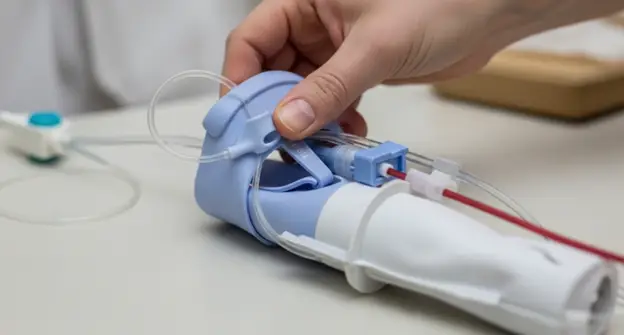
4. Insert, remove, or irrigate catheters. This includes urinary catheters (Foley or straight), G-tubes, NG-tubes, and any other indwelling device.
5. Perform sterile wound care or change sterile dressings. A sterile dressing change requires infection-control training the HHA role does not include. Reinforcing a non-sterile dressing on top of an existing one is different (see below), but sterile care is off-limits.
6. Perform tube feedings or manage feeding tubes. Even routine bolus feedings through a G-tube carry aspiration risk and must be handled by a nurse or a family member specifically trained on that client’s tube.
7. Give enemas, rectal medications, or suppositories. Both carry an injury risk and are treated as clinical procedures.
8. Diagnose conditions or interpret lab, imaging, or diagnostic results. HHAs can report what they observe. A rash, a change in behavior, a fall, a fever, a wound that looks different than yesterday. Naming what caused it is not their scope.
9. Prescribe, adjust, or change any medication. That includes over-the-counter medications the client asks for, and it includes any adjustment to dose, frequency, or timing.
10. Change the care plan or make clinical decisions. The care plan is written by a registered nurse and signed off on by the ordering clinician. HHAs work from that plan; they do not add to it or subtract from it.
The Medication Rule, Explained Properly
This is where most confusion sits, so it is worth being precise. Under HHA scope, a client “self-administers” medication and the aide “assists.” Assistance is legal; administration is not. Practically that means an HHA can bring the client their pillbox or bottle, read the label aloud, remind them of the time, remain nearby, and document that the client took it. What an HHA cannot do is remove medication from the bottle, place it in the client’s hand or mouth, apply prescription topicals, instill drops, or crush pills without the nurse’s written direction.
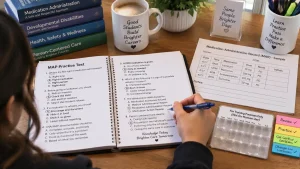
Some states allow narrow exceptions through nurse delegation, where an RN trains and delegates a specific medication task to a specific aide for a specific client. Massachusetts does not currently have a broad HHA medication delegation statute; medication administration by non-nurses in this state is authorized only through the Medication Administration Program (MAP) certification, and MAP applies specifically to DDS, DMH, DCF, and MassAbility community programs, not to home care by an HHA. In practice, if a Massachusetts client needs medications administered in the home and cannot self-administer, that job belongs to a visiting nurse, a family member trained by a nurse, or the client’s own hands with reminders from the HHA.
Changing vs Reinforcing a Dressing
This distinction trips up families constantly.
Changing a sterile dressing means removing the old dressing, cleaning the wound with sterile technique, and applying a new sterile dressing. Never in an HHA’s scope. Reserved for licensed nurses.
Reinforcing a dressing means adding an extra layer of gauze or padding on top of an intact existing dressing without removing it, to absorb minor drainage. Some states permit this for simple non-sterile dressings when it is explicitly written into the care plan. It is never automatic and never applies to sterile or surgical wounds. If you are unsure whether your loved one’s wound qualifies, the answer is to call the supervising nurse.
The title of the caregiver does not change this rule. HHA, PCA, and most CNAs face the same restriction on sterile wound care. Only nursing-level training permits it.
Common Edge Cases Families Ask About
Can an HHA give insulin? No. Insulin is an injection, and injections are outside scope for every level of unlicensed home care. Insulin belongs to the client, a family member trained by a nurse, or a nurse.
Can an HHA give a suppository or enema? No. Both carry injury risk and require nursing skill.
Can an HHA do tube feedings? No. Even routine G-tube feedings can go wrong quickly, and they belong to a nurse or a family member specifically trained for that client.
Can an HHA apply a hot or cold pack? Generally yes for simple comfort, but only when the care plan says so. If it is tied to a medical treatment (post-surgical care, deep vein thrombosis prevention), a nurse handles it.
Can an HHA change adult briefs and help with incontinence care? Yes. This is personal hygiene, not a medical task, and it is part of normal HHA duties.
Can an HHA give an OTC medication like Tylenol or a laxative when the client asks? No. Any medication decision, even OTC, belongs to the client or the nurse. The aide can remind the client that the bottle is on the shelf.
Can an HHA help with a client’s CPAP or oxygen concentrator? They can help the client put on a mask or turn on equipment they were shown, but they cannot adjust oxygen flow, change settings, or troubleshoot equipment beyond basic use.
Can an HHA cut nails? Fingernails yes, in most cases. Toenails and any nails on a diabetic client are off-limits because of the injury and infection risk.
What HHAs Can and Cannot Do at a Glance
| Home Health Aides CAN | Home Health Aides CANNOT |
|---|---|
| Assist with bathing, dressing, grooming, oral care | Give injections of any kind, including insulin |
| Help with toileting and incontinence care | Administer prescription or over-the-counter medications |
| Prepare simple meals and assist with feeding | Change sterile dressings or perform wound care |
| Take and record basic vital signs | Insert, remove, or irrigate catheters |
| Assist with safe transfers and ambulation | Perform tube feedings |
| Remind clients to take their medications | Diagnose conditions or interpret test results |
| Observe and report changes in condition | Give enemas or rectal medications |
| Provide companionship and emotional support | Adjust oxygen flow or change equipment settings |
| Light housekeeping tied to client safety | Change the care plan or make medical decisions |
| Reinforce a non-sterile dressing (when the plan allows) | Cut toenails, or fingernails on a diabetic client |
The Massachusetts Angle
Massachusetts HHAs work under Department of Public Health rules layered on top of the federal 42 CFR 484.80 competency requirements. The state does not have a broad nurse delegation act that expands the HHA scope for medications. What Massachusetts does have, unique to community programs, is the Medication Administration Program. MAP-certified staff can administer medications in DDS, DMH, DCF, and MassAbility programs (group homes, day programs, community residences), and the MAP certification requirements lay out exactly who qualifies. A home care HHA in a private client’s home does not use MAP. It is a program-specific authorization for community settings. If a Massachusetts client needs medications passed and cannot self-administer, the answer at home is a visiting nurse or a trained family member; in a MAP-registered community setting, it is MAP-certified staff.
What Happens If an HHA Steps Outside Scope
Consequences fall on three parties. The aide can lose their HHA certification and face civil liability if something goes wrong. The agency can be cited by CMS during a Medicare survey, which affects reimbursement and can trigger a corrective action plan. The client faces the actual clinical risk: a botched injection, a contaminated wound, a missed side effect that a trained clinician would have caught. That is why refusing to do a task outside scope is not stubbornness. It is protection.
What to Do If You Are Asked to Do Something Off-Scope
If you are an HHA and a client or family member asks you to do something outside your scope, the honest and safe answer is to say you are not trained or authorized for that specific task, that you would put the client at risk if you did it, and that you will call the supervising nurse to arrange the right person for it. Document the request and your response, tell your agency supervisor the same day, and offer to help find the right resource. Most families are not testing you; they simply do not know where the line is. A calm explanation solves it most of the time.
If you are a family member coordinating care and you find yourself needing tasks the HHA cannot do, the right move is to ask the agency to layer in visiting nurse hours, or to have the client’s doctor order skilled nursing for those specific tasks. Trying to talk an HHA into doing something outside their scope helps no one.
When to Escalate to Skilled Nursing
Some situations always call for a nurse rather than an HHA. Post-surgical wound care, IV therapy at home, catheter management, tube feedings, complex medication regimens including insulin dosing, wound care that requires sterile technique, and any assessment that needs clinical judgment. If the care plan is silent on a task and you are not sure, err on the side of asking the agency’s supervising nurse. That is why they are on the case.
Many families combine services: an HHA covers day-to-day personal care and observation, and a visiting nurse covers the clinical tasks on a scheduled basis. That combination gets the client the daily support they need without pushing tasks onto the wrong professional.
Frequently Asked Questions
Can a home health aide give medication? No, they can only remind clients to take medication, hand them the labeled bottle, and observe. Actually putting medication into a client’s mouth or applying prescription topicals is outside HHA scope.
Are home health aides allowed to do wound care? They can help keep the surrounding skin clean and can, in some states, reinforce a non-sterile dressing when the care plan allows. Changing a sterile dressing or performing wound care with aseptic technique requires a nurse.
Can a home health aide give insulin? No. Insulin is an injection, and injections are outside scope for HHAs, PCAs, and most CNAs. It belongs to the client, a family member trained by a nurse, or a nurse.
Can a home health aide take vital signs? Yes. Taking and recording basic vital signs (temperature, pulse, respiration, blood pressure) is inside scope. Interpreting them or acting on abnormal readings is not; the aide reports and the nurse decides.
Can a home health aide change diapers or briefs? Yes. Incontinence care is a personal hygiene task, not a medical one, and it is a normal part of the HHA role.
Who supervises a home health aide? A registered nurse from the home care agency, per the client’s care plan.
What is the difference between an HHA and a CNA? CNAs complete more clinical training and can perform a slightly broader set of tasks, but neither can administer medications or perform sterile wound care. Titles vary by state; the underlying rule on clinical scope is similar.
Who can administer medications in a Massachusetts home? The client themselves, a family member trained by a nurse, or a visiting nurse. In DDS, DMH, DCF, or MassAbility community programs (not private homes), MAP-certified staff can administer medications under specific rules.
What should an HHA do if asked to do something outside scope? Explain calmly that the task is outside training and would put the client at risk, document the request, notify the agency supervisor the same day, and offer to help coordinate the right professional.
Does a doctor’s order override HHA scope? No. A physician can order that a task be done, but scope-of-practice rules decide who is qualified to do it. The order and the scope both have to line up.
The Bottom Line
Home health aide scope exists in three layers: federal Medicare rules (42 CFR 484.80) that define competency, state Nurse Practice Acts that protect clinical tasks, and the written care plan for each client. Inside those three layers, HHAs do a lot: personal care, safety, observation, reminders, and companionship that make home living possible. Outside them, the same tasks belong to a nurse or a trained family member. If your loved one needs medications administered at home in Massachusetts and cannot self-administer, plan for visiting nurse hours or family caregiver training. If your community program setting needs medication administration by non-nurse staff, that is exactly what MAP certification exists for. Aides who want to expand what they can do have paths, too: HHA training plus MAP is a common Massachusetts stack that opens more roles and more pay without crossing into nursing licensure.