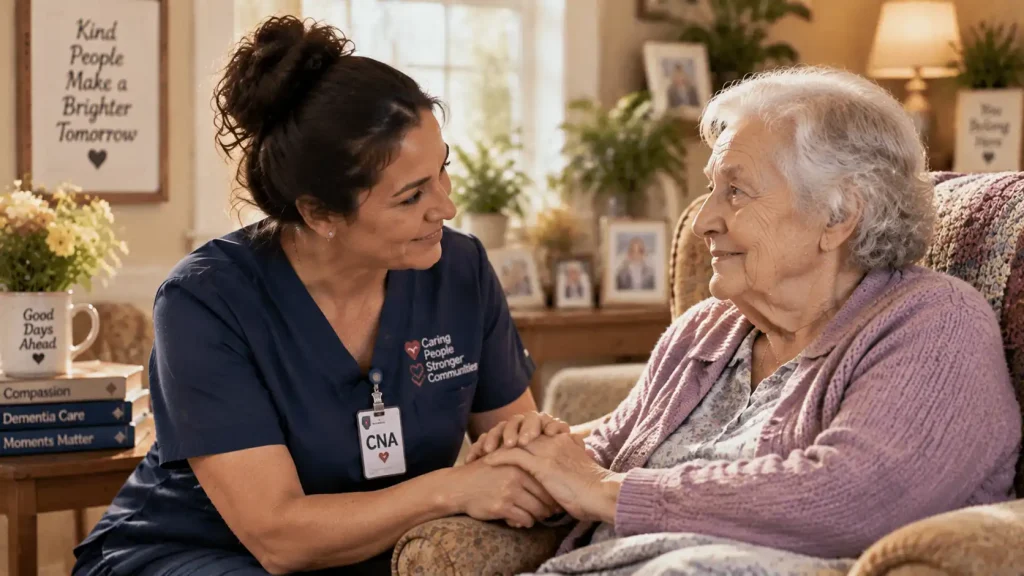
When words start to fail a person with dementia, ordinary conversation becomes hard, and both of you can end up frustrated. The good news is that communication is a skill you can improve. Small changes in how you speak, listen and use body language can turn a tense moment into a calm one.
Start Before You Speak
- Approach from the front, so you do not startle them
- Get to their eye level and make gentle eye contact
- Smile and keep your face and posture relaxed
- Reduce background noise first
- Say who you are and use their name
How to Say It
| Do | Instead of |
| Use short, simple sentences | Long explanations with several ideas at once |
| Ask one question at a time | Asking two or three things in a row |
| Offer simple choices, like tea or coffee | Open questions like what do you want to drink |
| Speak slowly and give time to answer | Rushing or finishing their sentences |
| Point or show while you speak | Relying on words alone |
Listen With Patience
Give the person time. A pause that feels long to you may be the time they need to find a word. Watch their face and hands for meaning when the words do not come. If they use the wrong word, focus on what they mean rather than correcting them.
Do Not Argue or Correct
This is the rule that helps most. If a person believes it is 1985, or asks for a parent who has passed away, arguing about the facts only causes distress. Meet them in their reality and reassure the feeling behind the words. Being kind matters more than being right.
Why It Prevents Difficult Behaviors
Good communication is not just kindness. A resident who feels understood resists care less and settles faster, which prevents many difficult behaviors before they start. It is a core part of Massachusetts dementia training for care staff.
Communicating Through Later Stages
As dementia advances, spoken words may fade, but connection does not have to. Touch, a warm tone, familiar music and simple presence still reach people in the later stages.
Frequently Asked Questions
What is the best way to talk to someone with dementia?
Approach calmly from the front, get to eye level, reduce noise, use short simple sentences, ask one thing at a time, and give time to respond.
Should I correct someone who says something untrue?
No. Arguing about facts usually increases distress. Meet them in their reality and reassure the feeling behind the words.
How do I communicate in later stages?
Words may fade, but touch, a warm tone, familiar music and calm presence still connect. Focus on comfort.
Does better communication reduce difficult behaviors?
Yes. A person who feels understood is calmer and resists care less, which prevents many behaviors before they start.
Dementia Communication Training in Massachusetts
One Health and Beyond trains care staff and families in dementia communication and behavior response across Massachusetts. Contact us to plan a seminar.