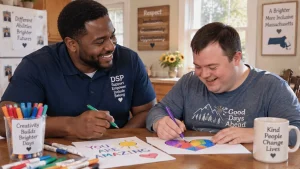
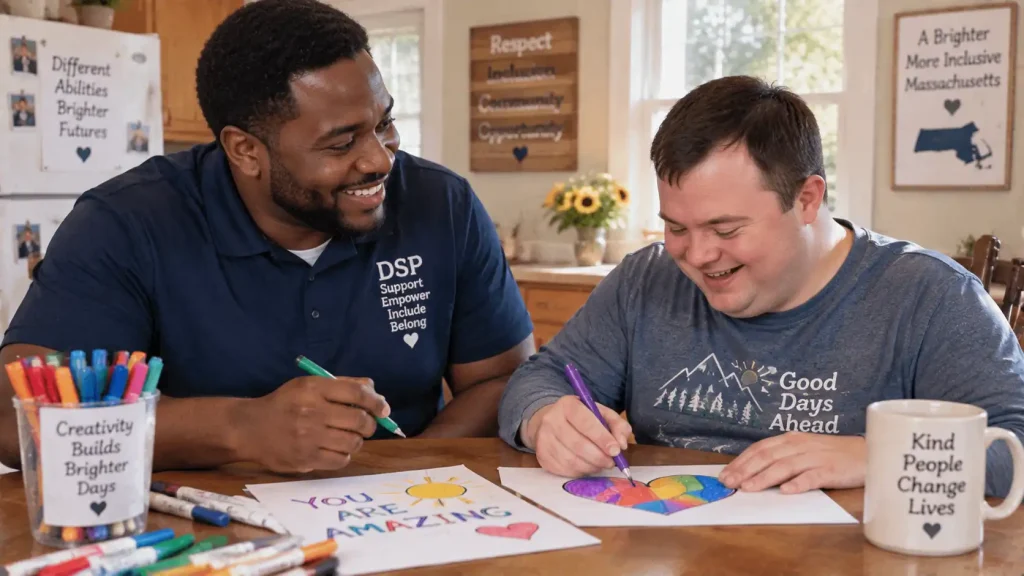
Direct support professional, or DSP, is one of the most accessible ways into human services work in Massachusetts. You do not need a degree, most employers provide paid training, and the work is meaningful. Here is what a DSP does and the training you need.
What a DSP Does
A DSP supports adults with intellectual and developmental disabilities so they can live as independently as possible, usually in group homes and day programs under the Department of Developmental Services. A typical day can include personal care, community activities, appointments, administering medications if MAP certified, following service plans, and documenting progress notes.
What You Need to Start
| Requirement | Details |
| Age and education | Usually at least 18 with a high school diploma or equivalent |
| Background check | Employers run background checks before hiring |
| Driver license | Often preferred, since DSPs may transport individuals |
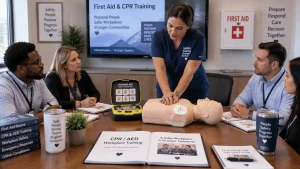
| Certifications | Usually provided as paid training after hire, including CPR and First Aid and MAP |
Why MAP Certification Is the Key Credential
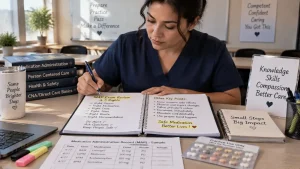
Look at almost any DSP job posting in Massachusetts and you will see MAP listed, because a DSP who can administer medications is far more valuable and it is one of the clearest ways to higher pay. Many agencies pay for it, but arriving already certified sets you apart. See our guide to MAP certification.
Room to Grow
DSP is an entry point, not a dead end. With experience and stacked credentials such as MAP, CPR and First Aid and home health aide training, DSPs move into lead staff and supervisor roles or wider healthcare careers.
Frequently Asked Questions
What does a DSP do?
A DSP supports adults with disabilities with daily living, community activities, medications if MAP certified, and following service plans, usually in group homes and day programs.
Do I need a degree?
No. Most positions require you to be at least 18 with a high school diploma or equivalent, plus a background check.
What training do DSPs need?
Common trainings include orientation, CPR and First Aid, and MAP certification, often provided as paid training after hire.
Why is MAP important for DSPs?
A DSP who can administer medications is more valuable to a group home, and MAP is one of the clearest paths to higher pay.
Get DSP-Ready in Stoughton, MA
One Health and Beyond trains direct care staff with the certifications DSP employers want most, MAP and CPR and First Aid. Contact us to get started.