Who Needs BLS Certification in Massachusetts? A Role by Role Breakdown
Basic Life Support certification is not just for nurses and paramedics. Across Massachusetts, a surprising range of roles either require BLS by law, rely on it for licensure, or strongly prefer it during hiring. Other roles do not technically need BLS but benefit so much from carrying the card that it becomes a competitive edge on every application. This guide walks through who needs BLS certification in Massachusetts role by role, so you can decide fast whether the course belongs on your to-do list.
Clinical Healthcare Roles (BLS Typically Required)
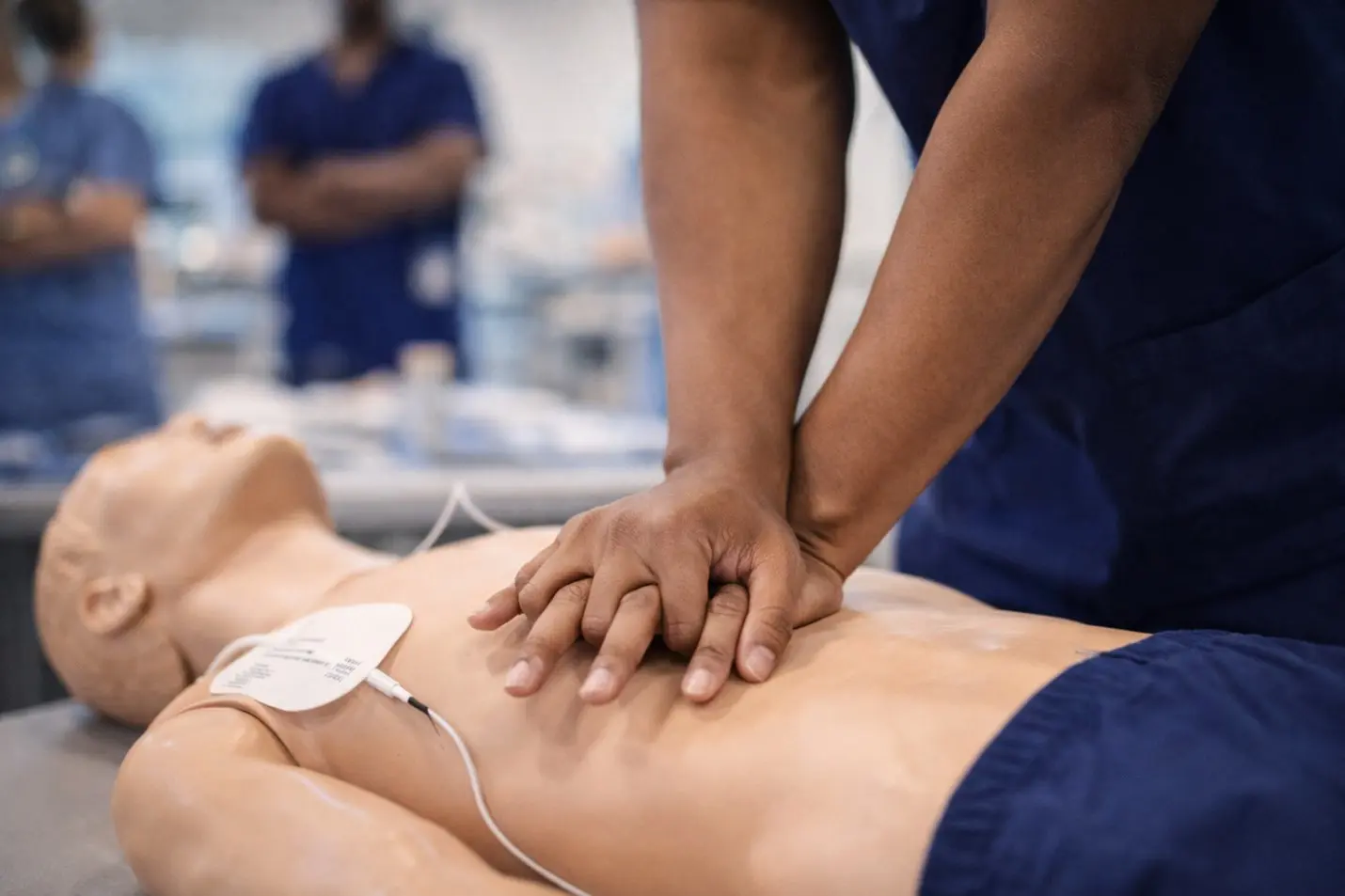
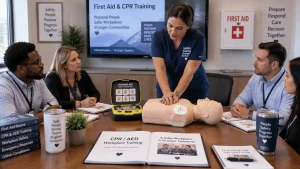
Alt Text: A healthcare professional performing chest compressions on a CPR training mannequin with AED pads attached during a BLS certification class.
Certified Nursing Assistants (CNAs)
Most long-term care facilities, hospitals, and skilled nursing facilities across Massachusetts require a current BLS card before the first shift. Some training programs also mandate BLS as a condition of clinical placement. Pairing BLS with your CNA credential speeds up hiring and often bumps starting pay. See BLS Certification for CNAs and HHAs for specifics.
Home Health Aides (HHAs)
Home health agencies in Massachusetts consistently list BLS as a preferred or required credential. Patients cared for at home often have complex medical histories, and an HHA who can perform provider-level CPR before emergency services arrive is a meaningful safety asset for the agency.
Registered Nurses and LPNs
Every RN and LPN in Massachusetts needs an active BLS Provider card. Nursing schools require it before clinical rotations begin, and state licensure renewals increasingly assume continuous BLS coverage. For nurses moving into critical care, ACLS is the next step after BLS.
Medical Assistants
Clinics, specialty offices, and urgent care centers across the state list BLS as a standard hiring requirement for medical assistants. The card signals that the candidate can respond appropriately if a patient collapses in the waiting room or during a procedure.
Nursing Students and Pre-Med Students
Almost every nursing program in Massachusetts requires BLS before starting clinical rotations. Pre-med students applying to medical school also benefit from listing BLS on applications because it demonstrates readiness for clinical exposure and hands-on learning.
Advanced Clinical Roles (BLS as Prerequisite)
Emergency Medical Technicians and Paramedics
EMTs and paramedics carry BLS as the baseline credential of their profession. Many state EMT certification programs build BLS directly into the curriculum, but employers still verify the card separately before hiring.
Physicians and Physician Assistants
Hospital-based physicians and PAs need current BLS at minimum. Those working in emergency medicine, anesthesia, critical care, cardiology, or hospital medicine also need ACLS, which requires an active BLS card as a prerequisite.
For the difference between the two credentials, read BLS vs ACLS: Which Certification Fits Your Healthcare Role?
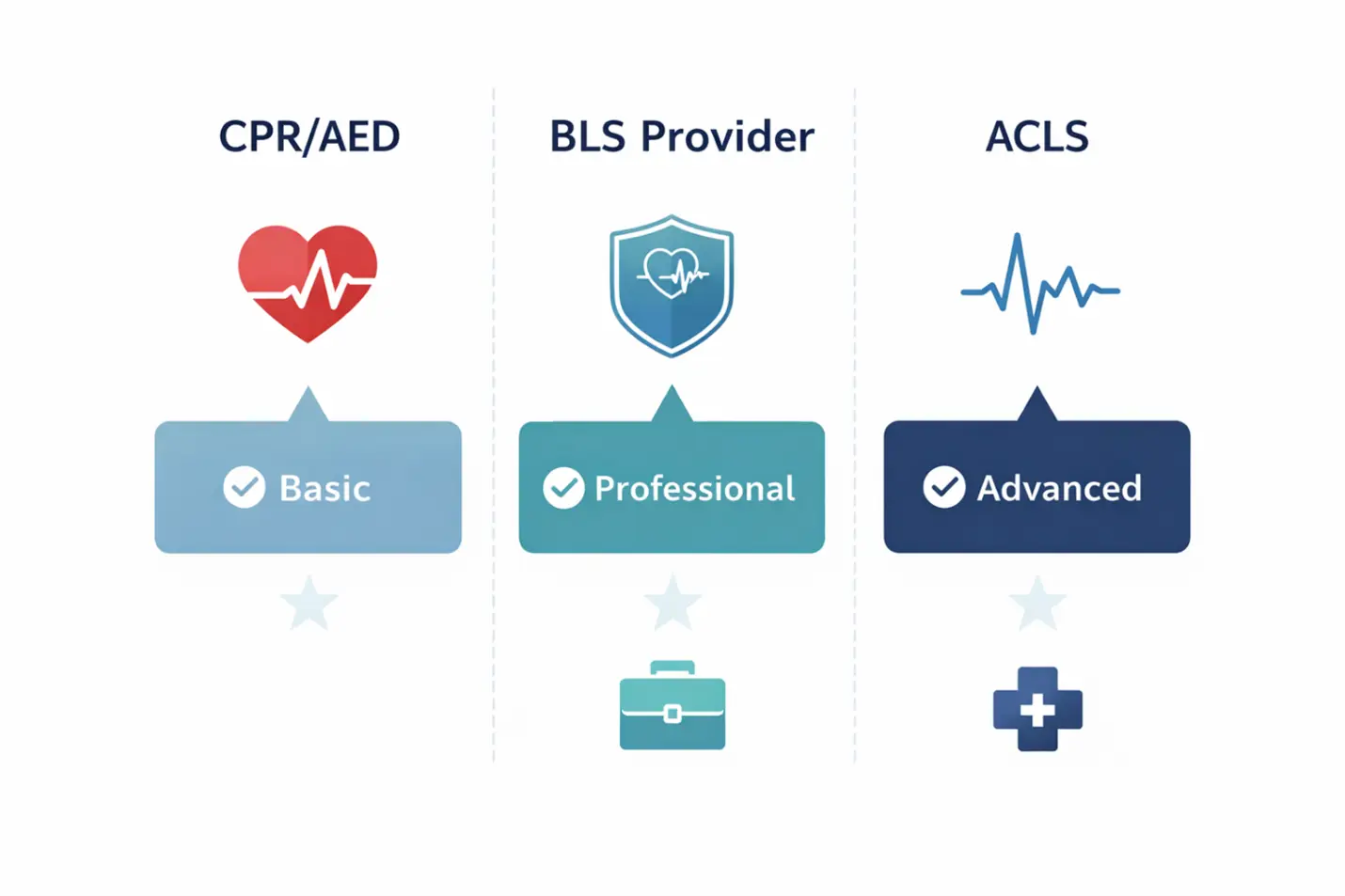
Alt Text: Infographic diagram comparing the differences between basic CPR, BLS (Basic Life Support), and ACLS (Advanced Cardiovascular Life Support).Respiratory Therapists
Respiratory therapists working in hospitals or outpatient settings carry BLS as a standard requirement. The card is a licensure baseline and a hiring expectation across Massachusetts healthcare systems.
Dental Office Teams
Dentists, Hygienists, and Dental Assistants
Massachusetts dental practices operate under rules that expect provider-level CPR competency for staff. Dentists carry BLS as part of licensure renewal expectations, and many offices require the entire clinical team, including hygienists and dental assistants, to maintain active BLS cards.
DDS Group Home and Day Program Staff
Direct support professionals working in Massachusetts Department of Developmental Services programs often carry BLS alongside their MAP certification. Residents in group homes and day programs can experience medical emergencies, and provider-level CPR dramatically improves response quality before emergency services arrive.
Non-Clinical Roles Where BLS Is Recommended
Personal Trainers and Fitness Instructors
Gyms, studios, and private training clients increasingly expect personal trainers to hold a current CPR or BLS card. BLS is the stronger credential and signals that the trainer is prepared to respond if a client experiences a cardiac event during a session.
Athletic Trainers and Coaches
School districts and youth sports programs in Massachusetts often require coaches to carry CPR or BLS certification. BLS is the provider-level option and prepares coaches for cardiac emergencies involving young athletes, which are rare but require fast and correct action.
Lifeguards and Aquatic Staff
Pool facilities, beaches, and summer camps require lifeguard certification that includes CPR and AED skills. Some aquatic employers prefer BLS over community CPR because it includes deeper training on rescue breathing and multi-rescuer coordination.
Teachers and School Staff
Massachusetts school districts increasingly expect classroom teachers, school nurses, and front office staff to hold active CPR or BLS certification. Schools with Epinephrine auto-injector or AED programs especially value BLS because the card confirms that staff can act effectively during a medical emergency on school grounds.
Childcare and Early Education Workers
Daycare centers and preschools often require CPR certification for all staff working directly with children. BLS Provider training includes pediatric and infant CPR, so the card exceeds state minimums and is often preferred during hiring at high-quality programs.
Family Caregivers and Community Members
Family members caring for an aging parent, a medically complex child, or a spouse recovering from cardiac surgery benefit enormously from BLS training. The course covers adult, child, and infant CPR, AED use, and choking response across every age group. For most family caregivers, BLS delivers everything needed to respond to a home emergency with confidence.
Community members who want to be ready for any scenario also choose BLS because the provider-level curriculum is deeper than community CPR and the card lasts two full years.
Career Changers Exploring Healthcare
If you are considering a pivot into healthcare but not yet enrolled in a CNA, HHA, or nursing program, BLS is a fast and affordable signal of commitment. The card appears on your resume immediately, costs far less than a full certification program, and often tips the scale during hiring for entry-level roles.
How to Get Started
If any of the roles above match your situation, the next step is enrollment. Our Stoughton campus runs BLS Provider classes on flexible evening and weekend schedules. See current BLS class dates and reserve your seat.
For the complete enrollment walkthrough, read our step-by-step BLS certification guide. Still deciding between basic CPR and BLS? Start with BLS vs CPR: What’s the Difference before picking a class.