An automated external defibrillator is the single most powerful tool a bystander or healthcare worker can reach for during a cardiac arrest. High-quality chest compressions keep oxygen moving to the brain, but an AED is what actually restarts a heart in specific rhythms. Used within the first few minutes of collapse, an AED can double or even triple the chance of survival. Here is exactly how to deploy one during a code, step by step, with the coordination points that matter most when seconds decide the outcome.
What an AED Actually Does
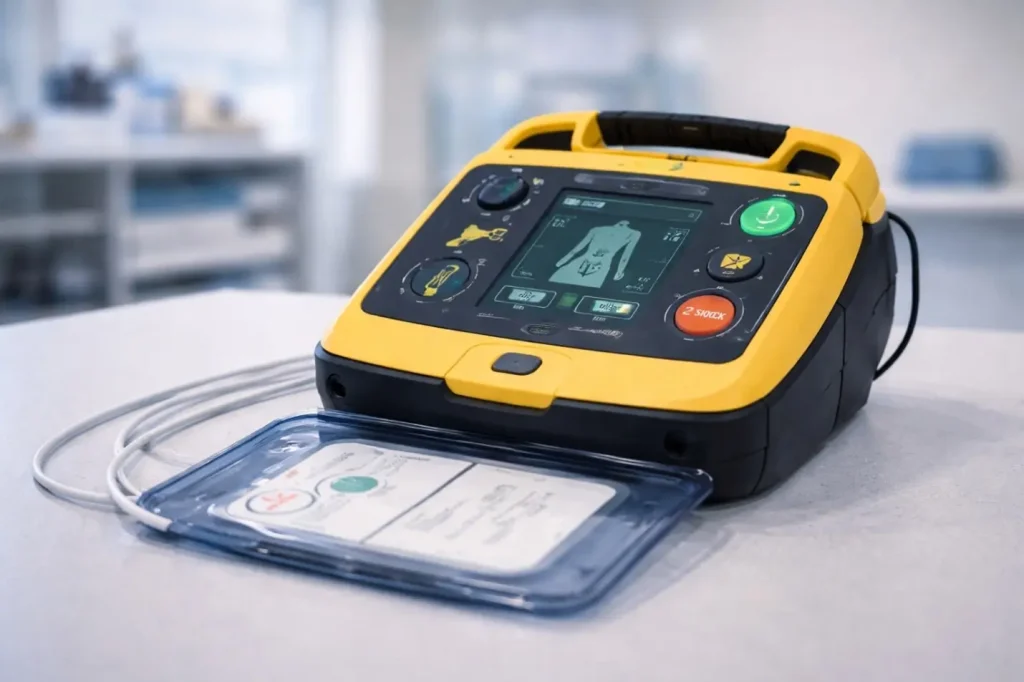
An AED reads the electrical activity of the heart and decides whether that rhythm will respond to a shock. Not every cardiac arrest is shockable. The device knows the difference, analyzes the rhythm automatically, and tells you whether to press the shock button or continue compressions. That is why people without medical training can operate an AED safely: the device makes the diagnostic call, not the person holding the pads. For a deeper look at why some rhythms respond to a shock and others do not, see shockable vs non-shockable heart rhythms.
When to Deploy an AED
Deploy an AED as soon as you confirm a person is unresponsive and not breathing normally. The sequence is simple. One rescuer starts chest compressions. A second rescuer grabs the AED and starts setup while compressions continue. The goal is to keep any pause in compressions short and still get the pads on and a rhythm analysis running within about 90 seconds of collapse.
If you are alone and no AED is within arm’s reach, call 911 first and start compressions. An AED at minute 4 is still far better than no AED. Standing still while you hunt for a device is never the right call.
Step-by-Step AED Deployment
Step 1: Power On the Device
Open the lid or press the power button. Most modern AEDs start voice prompts the moment they turn on. Those prompts are your guide. Listen and follow each one without skipping ahead. Even experienced responders follow the voice prompts because they prevent missed steps under pressure.
Step 2: Expose the Chest
Get clothing off the chest quickly. Trauma shears help when clothing is bulky. Check for and clear three common obstacles. Moisture needs a fast towel-off so pads stick. Heavy chest hair at the pad sites may need quick shaving with the razor included in most AED kits. Medication patches at pad sites must be peeled off and the skin wiped clean before pads go on.
Step 3: Apply the Pads Correctly
Pad placement matters for both analysis and shock delivery. The standard anterolateral setup puts one pad on the upper right chest just below the collarbone and the second pad on the left side of the chest below the armpit. The diagrams on the pads themselves show this placement clearly.
For infants and small children, use pediatric pads if available and follow the manufacturer’s anterior-posterior placement guidance, which usually means one pad on the front of the chest and one on the back. A few special situations to watch for: patients with an implanted pacemaker or defibrillator get pads placed at least one inch away from the device outline; obvious chest trauma may need alternate placement; and very sweaty patients need a quick dry before pads are applied.
Step 4: Allow Rhythm Analysis
Once the pads are connected, the AED analyzes the rhythm. This step takes roughly 10 to 15 seconds. During analysis, no one touches the patient. The AED will announce it clearly, “stand clear” or “analyzing.” Even slight motion can interfere with the reading, so pause compressions, step back, and let the device do its work.
Step 5: Deliver the Shock If Advised
If the AED recommends a shock, confirm no one is in contact with the patient. Announce “clear” in a loud voice and do a quick visual sweep before pressing the shock button. The announcement exists because a single touch during shock delivery can hurt the rescuer. After you press the button, the AED delivers the shock and the patient may jolt.
If the AED does not recommend a shock, resume chest compressions right away. No shock does not mean failure. It means the current rhythm is not one that responds to defibrillation, and compressions are the right intervention.
Step 6: Resume CPR Immediately
Whether a shock was delivered or not, restart high-quality compressions within seconds of the AED prompt. The device runs another analysis about every two minutes. Work in rounds: two minutes of compressions, analysis, shock if advised, then compressions again. Continue until advanced providers take over or the patient shows signs of return of spontaneous circulation.
Coordinating AED Use With Ongoing CPR
The biggest mistake new responders make is stopping compressions longer than needed while setting up the AED. Every extra second without compressions costs perfusion pressure. The fix is a clean role split. One rescuer owns the AED. Another owns compressions and does not stop unless the AED announces analyzing or shocking.
When the AED says “analyzing,” the compressor steps back within one second. When analysis ends and any shock is delivered, compressions resume within one second of shock delivery. Clean team coordination keeps total pause time under 10 seconds per cycle. For how team dynamics are taught in class, see what to expect in a BLS class.
Real-World Complications to Know
A few common issues come up on real codes that classroom practice does not always cover. Batteries sometimes need replacing mid-code, especially on older units stored in low-use public spaces. Pad adhesive can fail on very sweaty, oily, or wet skin, which means a fresh set of pads from the backup supply.
Pediatric pads may not be in every AED kit. If they are not, adult pads placed in an anterior-posterior configuration are acceptable for children, though not ideal. For a patient with chest hair so dense that pads will not stick, a firm pull on a first pad to strip hair can make room for a second set. It sounds harsh, but the patient is unconscious and the priority is skin contact for accurate analysis.
Where to Find AEDs in Massachusetts Facilities
Massachusetts hospitals, long-term care facilities, dental offices, and many public buildings store AEDs in clearly marked wall cabinets or on emergency carts. Gyms, sports arenas, schools, and large offices commonly mount them on public walls. Know where the nearest AED is at your worksite before an emergency happens. On your first day at any new facility, ask a coworker or supervisor to point out every AED location on your shift route.
Practice These Skills in a Class
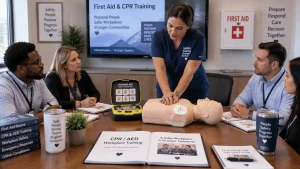
Reading about AED deployment is the starting point. The confidence to run it under pressure comes from hands-on practice with an AED trainer and a live instructor. Our Stoughton CPR and First Aid classes cover AED deployment drills so every student leaves having operated the device themselves, alongside compressions, rescue breathing, and choking response across age groups. If your role calls for provider-level BLS with a hospital or clinical employer, a BLS Provider course from a program that offers it is what you will need instead, and the differences are laid out in BLS vs CPR.